How Renewable Energy Can Strengthen the Competitiveness of Bangladesh’s Export Industries
Published at - September 19, 2026
Bangladesh’s export industries operate in an increasingly competitive global market where production efficiency, energy costs, sustainability, and environmental performance are becoming closely connected.
For sectors such as RMG, textiles, footwear, manufacturing, packaging, and other export-oriented industries, energy is no longer simply an operational expense. It is becoming an important part of long-term business strategy.
This is where renewable energy can play a significant role.
By integrating solutions such as industrial rooftop solar, export-oriented businesses can reduce dependence on conventional energy sources, improve energy cost management, reduce carbon emissions, and strengthen their alignment with global sustainability expectations.
For Bangladesh’s export industries, renewable energy is therefore not only about producing clean electricity—it is also about building a more resilient and competitive industrial future.
Why Energy Has Become a Competitiveness Issue for Export Industries
Energy plays a critical role in almost every stage of industrial production. From spinning and dyeing to cutting, sewing, finishing, packaging, and warehousing, factories depend on a reliable and affordable energy supply.
For export-oriented manufacturers, fluctuations in energy costs can directly affect operating expenses and production planning.
At the same time, international buyers are increasingly paying attention to the environmental performance of their supply chains. This means manufacturers are facing a broader set of expectations around:
- Energy efficiency
- Renewable energy adoption
- Carbon emissions
- Environmental performance
- Sustainable production
- Long-term climate commitments
Renewable energy can address several of these priorities simultaneously.
Renewable Energy Can Help Reduce Industrial Energy Costs
One of the most direct business benefits of renewable energy is the potential to reduce electricity costs.
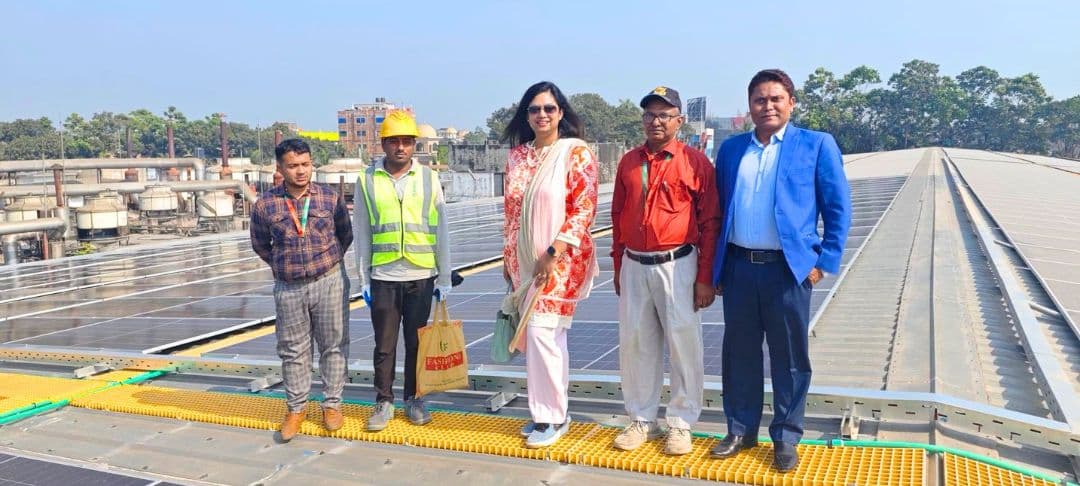
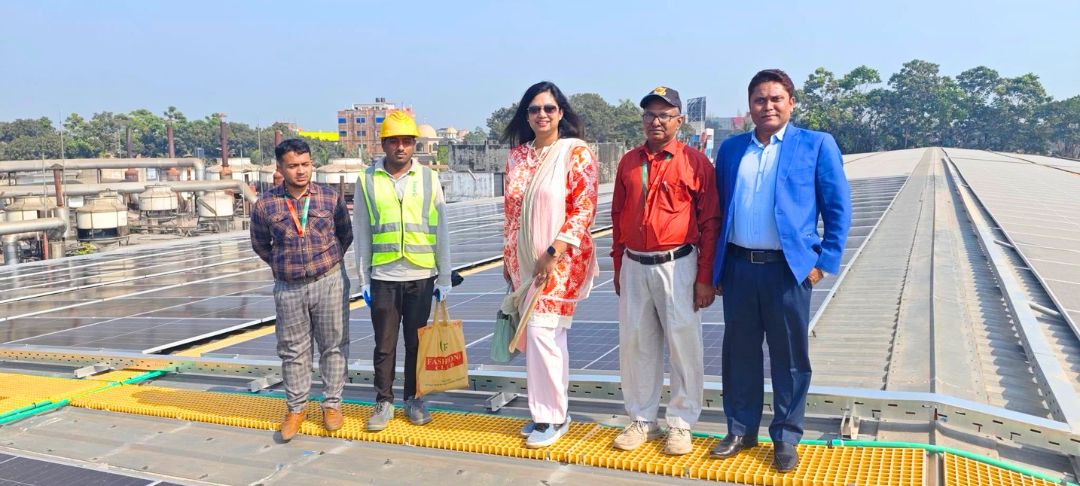
Bangladesh has significant potential for rooftop solar, particularly across industrial and commercial facilities.For factories with large rooftop areas, solar can turn previously underutilized space into an energy-generating asset.
Turning Factory Rooftops into Energy Assets
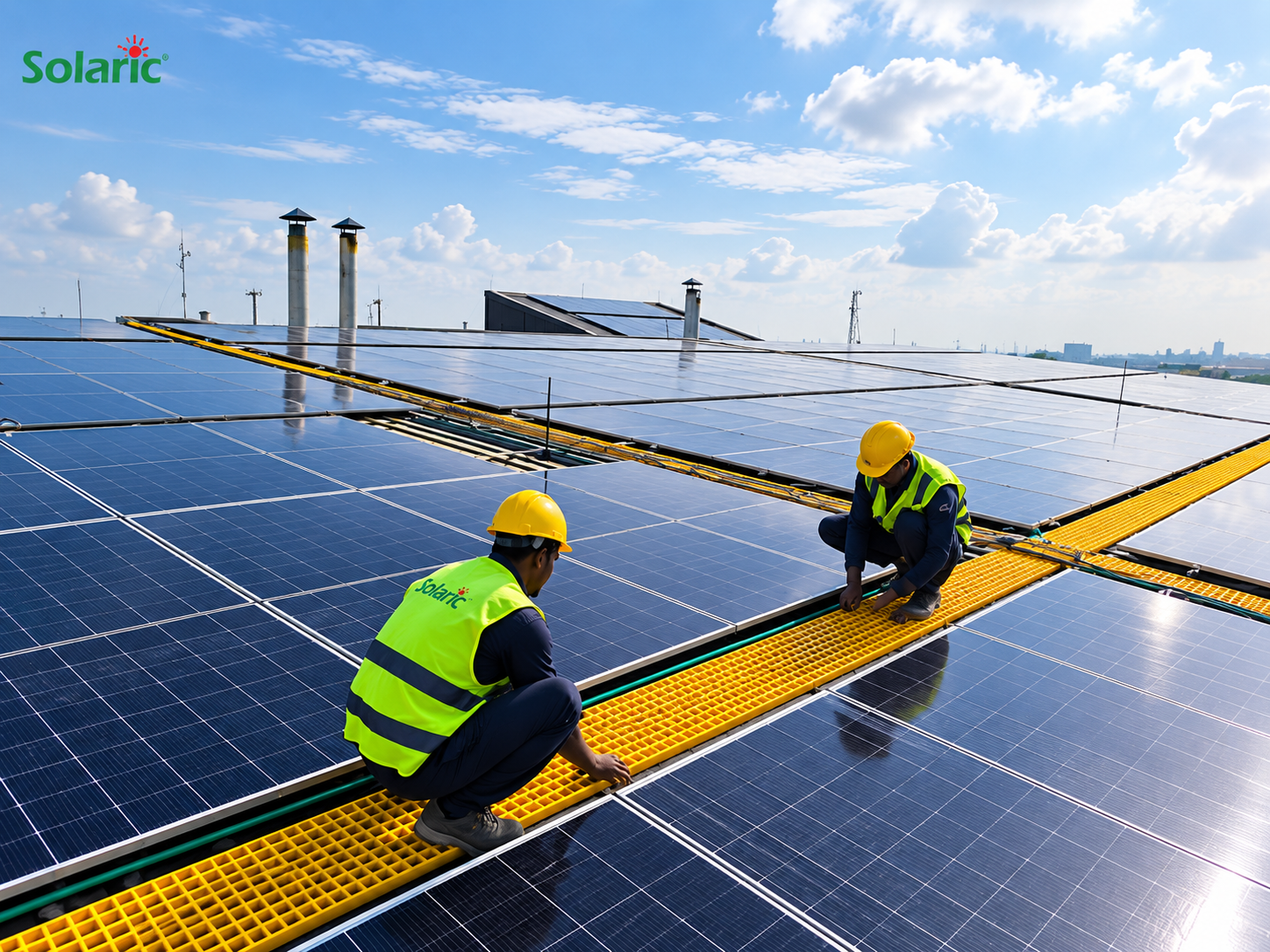
A properly designed rooftop solar system can generate electricity close to where it is consumed. This can help businesses reduce their dependence on conventional grid electricity during suitable operating hours.
For export manufacturers operating energy-intensive production lines, even a meaningful reduction in conventional electricity consumption can contribute to better long-term energy cost management.
Solaric’s experience includes rooftop solar projects across industrial and commercial sectors under both CapEx and OpEx models, allowing businesses to consider different investment approaches based on their financial and operational requirements.
Renewable Energy Can Strengthen Energy Resilience
Competitiveness is not only about reducing costs. It is also about maintaining stable operations.
Unexpected energy disruptions can affect production schedules, machinery, delivery commitments, and ultimately customer relationships. For export-oriented manufacturers working against strict production and shipment timelines, energy reliability can therefore have significant operational value.
Renewable energy, particularly when integrated into a broader energy management strategy, can help businesses diversify their energy sources and reduce dependence on conventional power.
Solaric’s approach to industrial solar focuses on designing systems around the operational requirements of the facility rather than simply installing panels. Proper feasibility assessment, system design, electrical integration, monitoring, and long-term maintenance all contribute to dependable project performance.
Lower Carbon Emissions Can Support Global Supply Chain Requirements
For Bangladesh’s export industries, sustainability is increasingly connected to international market access and buyer expectations.
Global brands and buyers are placing greater emphasis on the environmental performance of their supply chains. Manufacturers that can demonstrate measurable progress in reducing emissions and increasing renewable energy use can strengthen their sustainability profile.
Solar power provides a practical pathway for reducing the carbon intensity of industrial electricity consumption.
Renewable energy as an important contributor to industrial sustainability through long-term sustainability, improved energy security, and reduced carbon emissions.
Supporting More Sustainable Manufacturing
For sectors such as RMG and textiles, renewable energy can become part of a broader sustainability strategy alongside energy efficiency, water management, waste reduction, and responsible resource use.
This makes solar more than an energy project. It can become part of a factory’s wider approach to sustainable manufacturing and responsible production.
Renewable Energy Can Strengthen the Export Brand
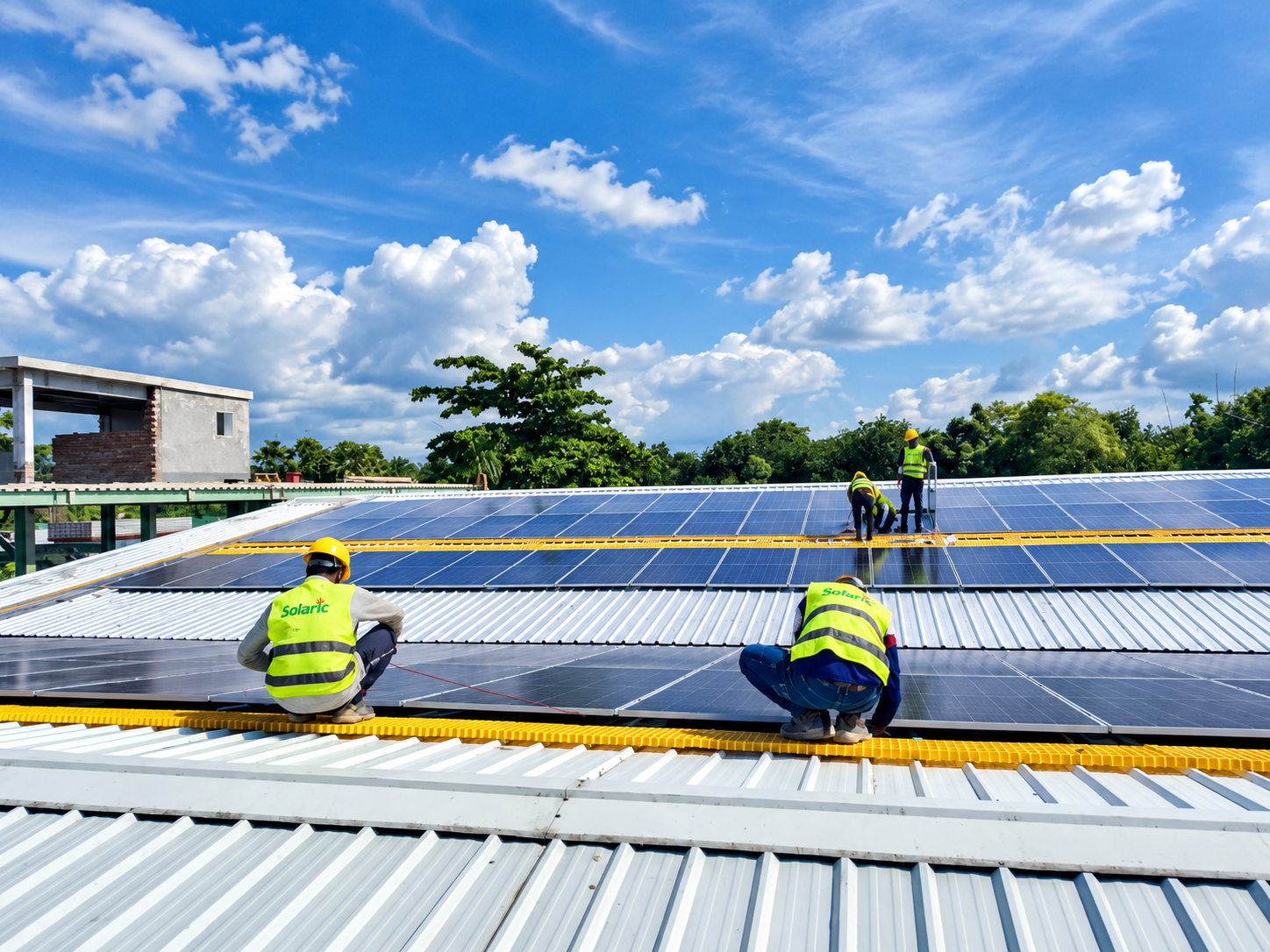
Sustainability is increasingly becoming part of how manufacturing companies communicate their value to international customers.
A factory that actively invests in renewable energy can demonstrate that sustainability is being integrated into its operations rather than treated only as a reporting exercise.
For export-oriented businesses, this can support:
- Sustainability reporting
- Environmental performance targets
- Renewable energy commitments
- Buyer sustainability requirements
- Corporate ESG initiatives
- Long-term decarbonization strategies
Renewable energy adoption can strengthen a company’s brand and help businesses align with global sustainability standards.
Renewable Energy Creates a Long-Term Strategic Advantage
The value of renewable energy goes beyond immediate electricity savings. As industries move toward cleaner production and stronger environmental standards, businesses that invest early in renewable energy can develop practical experience in managing clean energy, monitoring performance, measuring emissions reductions, and integrating sustainability into their operations.
For Bangladesh’s export sector, this can be particularly relevant as manufacturers compete not only on product quality and cost, but also on supply-chain sustainability and environmental performance.
Solaric has already implemented rooftop solar projects across Bangladesh under both CapEx and OpEx models, supporting industries in their transition toward cleaner energy. The company’s  current portfolio includes 182+ MWp commissioned, 40+ MWp under development, and 85+ MWp operational projects.
Why Solaric for Export-Oriented Industries?
Moving to renewable energy requires more than selecting solar panels. Industrial projects need proper feasibility assessment, engineering, financial planning, installation, grid integration, commissioning, monitoring, and long-term O&M.
Solaric provides turnkey solar solutions covering the project lifecycle from design and engineering to procurement, installation, grid connection, commissioning, and maintenance. Its technical team works across CapEx, OpEx, and utility-scale solar projects.
With experience across industrial sectors, Solaric helps businesses evaluate renewable energy opportunities based on their specific rooftop conditions, energy consumption, investment model, and long-term operational requirements.
For export-oriented manufacturers, this integrated approach can make renewable energy a practical part of a broader business strategy—not simply an additional infrastructure investment.
Contact Solaric
Bangladesh’s export industries are entering a period where energy efficiency, sustainability, and competitiveness are becoming increasingly interconnected.
Renewable energy can help factories address these challenges by reducing conventional electricity dependence, supporting lower-carbon production, improving energy resilience, and strengthening their sustainability profile.
If your factory is exploring industrial rooftop solar or a long-term renewable energy strategy, Solaric can help assess the opportunity and develop a solution aligned with your operational and financial requirements.
Contact Solaric
Phone: +880 1750-150251
Email: megaroof@solaricglobal.com
Website: www.solaricglobal.com